

In recent years, omega-3 fatty acids have gained significant attention not only for their cardiovascular and cognitive benefits, but also for their powerful role in supporting immune function. As chronic inflammation and immune-related disorders continue to rise, understanding how nutrition influences immunity has never been more important. Omega-3s, particularly EPA and DHA, are emerging as key modulators of immune balance, helping the body fight infections, resolve inflammation, and maintain overall health. This article explores the fascinating mechanisms through which omega-3s interact with the immune system and highlights the clinical evidence behind their protective effects.
Omega-3 fatty acids exert their effects on the immune system through several key mechanisms. First and foremost, these fatty acids influence the composition of cell membranes, altering their structure and functionality. EPA and DHA are also precursors of specialized pro-resolving mediators such as resolvins, protectins, and maresins, which help actively resolve inflammation and bring inflammatory responses to a close, preventing them from becoming chronic.
Omega-3s can alter how immune cells respond to infections and damage. As a result, omega-3s can:
- Reduce the secretion of pro-inflammatory cytokines: Omega-3s alter the composition of eicosanoids (signaling molecules), including prostaglandins and leukotrienes, which regulate the inflammatory response. Instead of inducing a strong inflammatory reaction like omega-6 fatty acids, omega-3s promote the production of anti-inflammatory eicosanoids.
- Increase the secretion of anti-inflammatory cytokines: Omega-3s can affect immune cells such as macrophages and stimulate the production of anti-inflammatory cytokines like interleukin-10 (IL-10), which suppress inflammation.
Scientific research shows that omega-3s act on the GPR120 receptor, which functions as a sensor for these fatty acids and mediates wide-ranging anti-inflammatory effects. This mechanism involves the inhibition of key inflammatory pathways, including NF-κB activation and the production of pro-inflammatory cytokines.
Effects on Different Components of the Immune System
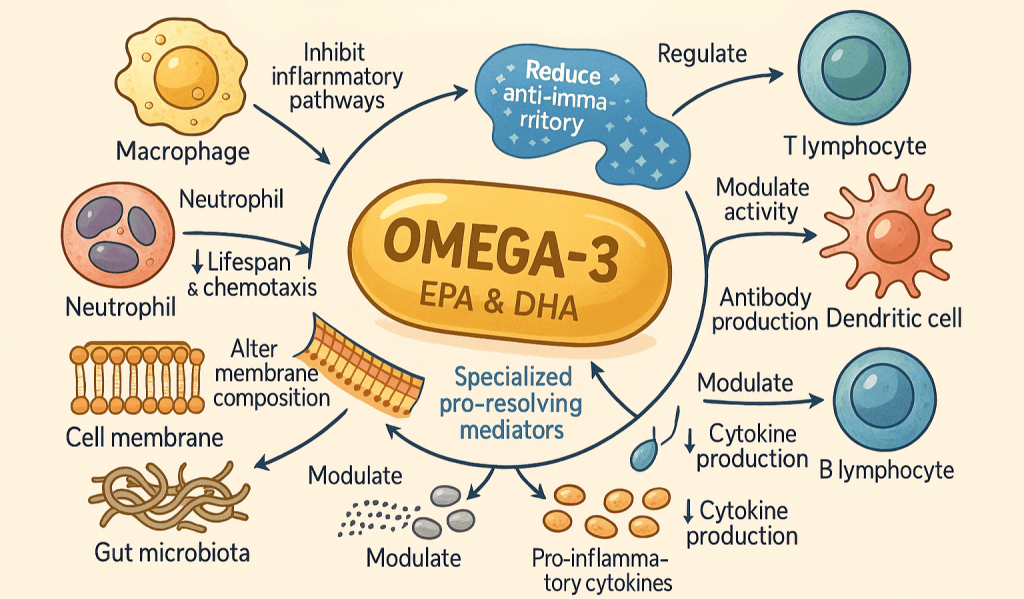
Macrophages and the Innate Immune System
Macrophages are key cells of the innate immune system, playing a central role in inflammatory responses and in clearing pathogens and damaged cells. Omega-3s can:
- Enhance their ability to eliminate pathogens and dead cells (phagocytosis): By modifying macrophage function, omega-3s may improve the body’s ability to cope with infections.
- Reduce excessive inflammatory responses: Omega-3s also influence how macrophages initiate inflammation, preventing overly strong responses that may lead to chronic inflammation and autoimmune diseases.
- Promote tissue healing: Omega-3s support the shift of macrophages from the M1 (pro-inflammatory) phenotype to the M2 (anti-inflammatory and regenerative) phenotype, aiding in tissue repair and resolution of inflammation.
Neutrophils
Neutrophils are the most numerous white blood cells in peripheral blood and a crucial part of innate immunity. They act as the first line of defense, with rapid and strong responses targeting microbes, especially bacteria and fungi.
- Omega-3s shorten the lifespan of overly active neutrophils, preventing prolonged inflammation.
- They stimulate the production of lipoxins and resolvins by neutrophils, which help resolve inflammation.
- Omega-3s enhance neutrophil chemotaxis (movement toward inflammatory signals) while limiting excessive responses.
T Lymphocytes
T cells are essential for adaptive immunity, helping to identify and eliminate foreign pathogens, especially during viral infections and in detecting cancerous cells. Omega-3s can:
- Modulate T cell activity: Studies show that omega-3s influence T cell differentiation, promoting a shift toward more regulatory types, such as regulatory T cells, which help control excessive immune responses and maintain balance.
- Increase the number of regulatory T cells (Tregs): These cells suppress overactive immune responses, which may help prevent autoimmune diseases.
B Lymphocytes
B cells are responsible for producing antibodies (immunoglobulins) that fight infections. Omega-3s can:
- Support the production of appropriate antibodies: In response to infection, omega-3s help B cells produce antibodies that recognize pathogens.
- Enhance immune response: By improving B cell function, omega-3s contribute to quicker and more effective pathogen recognition and elimination.
Dendritic Cells
Dendritic cells are crucial for initiating immune responses, as they serve as a bridge between innate and adaptive immunity by presenting antigens to T cells. Omega-3s can:
- Modify dendritic cell activity, leading to reduced overactivation of the immune system and thus potentially protecting against autoimmune diseases.
- Alter antigen presentation: Omega-3s influence how dendritic cells present foreign particles (antigens) to T cells, which may allow for a more controlled immune response.
Natural Killer (NK) Cells
NK cells are cytotoxic cells of the innate immune system. Their main function is to rapidly detect and destroy virus-infected and cancerous cells.
- Omega-3s regulate NK cell responses in a more balanced way, supporting immune defense without causing overactivation.
- Overall, omega-3s act more as immune modulators than stimulants.
Effects on the Gut Microbiome
The gut microbiome plays a crucial role in modulating the immune system. Omega-3s can:
- Alter the composition of the microbiome: Research shows that omega-3s can influence gut microbiota, which in turn can positively affect immune system function. A diverse gut microbiome supports better immune responses, including protection against infections and autoimmune diseases.
Differences in Immune Function Based on Omega-3 Levels
Optimal Omega-3 Levels
Studies suggest that an Omega-3 Index (the percentage of EPA and DHA in red blood cells) above 6.6%, and preferably over 8.5%, is associated with better immune system balance. At optimal levels:
- The neutrophil-to-lymphocyte ratio (NLR) is lower, indicating a balanced immune system
- The risk of chronic inflammation is reduced
- The body is more capable of resolving inflammation
- Resistance to bacterial and fungal infections is improved
Omega-3 Deficiency
An Omega-3 Index below 6.6% may indicate an imbalanced immune system. Omega-3 deficiency is associated with:
- Increased levels of chronic inflammation
- Higher risk of autoimmune diseases
- Poor resolution of inflammatory responses
- Increased production of pro-inflammatory mediators from omega-6 fatty acids
Clinical Evidence
COVID-19 and Viral Infections
Research on COVID-19 is particularly interesting. A study in Sweden showed that intravenous omega-3 administration in elderly patients hospitalized with COVID-19 stimulated inflammation resolution without suppressing the immune response. Similarly, a Mexican clinical study found that omega-3 supplementation in COVID-19 patients reduced neutrophil counts and improved metabolic parameters.
Autoimmune Diseases
The long-term VITAL study showed that 5-year supplementation with omega-3s combined with vitamin D reduced the incidence of autoimmune diseases by 22%. Other studies have shown beneficial effects of omega-3s in:
- Type 1 diabetes
- Rheumatoid arthritis
- Multiple sclerosis
Conclusion
Omega-3 fatty acids play a fundamental role in modulating the human immune system. At adequate levels, they promote a balanced immune response, reduce chronic inflammation, and may protect against autoimmune diseases. A deficiency is associated with immune imbalance and increased risk of chronic inflammation. However, maintaining balance is crucial—while omega-3s are beneficial for long-term immune health, excessive suppression of inflammation can sometimes impair the body’s ability to fight acute infections.
Get acquainted with the products we recommend that support health and well-being
References
- Gutiérrez, S., Svahn, S. L., & Johansson, M. E. (2019). Effects of omega-3 fatty acids on immune cells. International Journal of Molecular Sciences, 20(20), 5028.
- Calder, P. C. (2013). n-3 fatty acids, inflammation and immunity: New mechanisms to explain old actions. Proceedings of the Nutrition Society, 72(3), 326–336.
- Karolinska Institutet. (2022, April 26). Positive effects of omega-3 on the immune system in cases of severe COVID-19.
- Wild Atlantic Health. (n.d.). Omega-3 and its effect on the immune system.
- Harris, W. S., et al. (2022). Therapeutic use of omega-3 fatty acids for immune disorders. International Journal of Molecular Sciences, 23(1), 540.
- GrassrootsHealth. (2022, February 15). Omega-3 Index below 6.6% may be an indicator of immune system imbalance.
- Poggioli, R., et al. (2023). Modulation of inflammation and immunity by omega-3 fatty acids. European Review for Medical and Pharmacological Sciences, 27(3), 1034–1048.
- Oh, D. Y., et al. (2010). GPR120 is an omega-3 fatty acid receptor mediating potent anti-inflammatory and insulin-sensitizing effects. Cell, 142(5), 687–698.
- Hu, Y., et al. (2021). Omega-3 fatty acids for the primary and secondary prevention of cardiovascular disease. The Lancet, 398(10301), 1041–1051.
- Wright On Marketing. (2022, August 9). Two new Omega-3 Index studies explore benefits for immunity and cell membrane integrity in healthy people.
- Pilkington, S. M., et al. (2013). Randomized controlled trial of oral omega-3 polyunsaturated fatty acids in solar keratosis. The British Journal of Dermatology, 168(2), 400–410.
- Calder, P. C. (2019). Omega-3 fatty acids and inflammatory processes: From molecules to man. Biochemical Society Transactions, 48(1), 51–59.
- Calder, P. C. (2013). Omega-3 polyunsaturated fatty acids and inflammatory processes: Nutrition or pharmacology? British Journal of Clinical Pharmacology, 75(3), 645–662.
- Simopoulos, A. P. (2002). Omega-3 fatty acids in inflammation and autoimmune diseases. Journal of the American College of Nutrition, 21(6), 495–505.
- Hernández-Cárdenas, C. M., et al. (2024). Effectiveness of omega-3 fatty acid supplementation in improving outcomes in COVID-19 patients. [Journal name].
- Poggioli, R., et al. (2023). Modulation of inflammation and immunity by omega-3 fatty acids. European Review for Medical and Pharmacological Sciences, 27(3), 1034–1048.
- OmegaQuant. (2021, February 2). How do omega-3s impact immune function?
- Arnardottir, H., et al. (2021). Immunomodulation by intravenous omega-3 fatty acid treatment in older subjects hospitalized for COVID-19.
- Clayton, P. (2020). Strengthening your immune system. How to fight infection, allergy and autoimmune disease.