
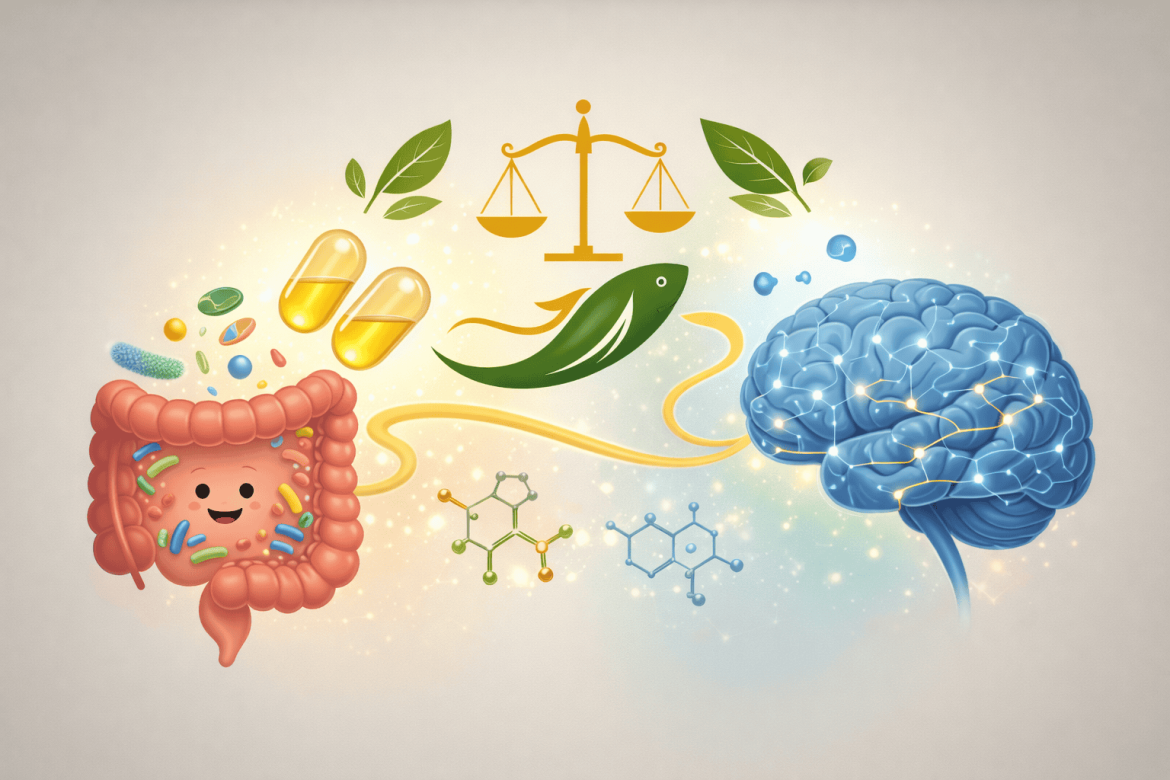
In a world where chronic stress, mood disorders and digestive problems are becoming increasingly common, understanding the gut–brain axis is gaining exceptional importance. More importantly, growing scientific evidence shows that what happens in the gut can directly influence how we think, feel and function mentally. This article therefore explores how omega-3 fatty acids—specifically EPA and DHA—operate at the intersection of the digestive and nervous systems. As a result, you will better understand why a diet rich in omega-3 can simultaneously support gut health and optimal brain performance.
The importance of omega-3 for the gut–brain axis
Omega-3 fatty acids, such as EPA and DHA, are essential nutrients found primarily in fatty marine fish and are widely recognized for their positive effects on overall health. However, in recent years researchers have discovered that their role extends far beyond cardiovascular or cognitive support. In fact, omega-3 fatty acids play a crucial role in communication along the gut–brain axis.
The gut and the brain are connected through a complex network of neural (especially via the vagus nerve), hormonal and immune signals, collectively referred to as the gut–brain axis. Within this system, omega-3 fatty acids appear to act as a biological “bridge.” They influence the gut microbiome, reduce intestinal inflammation and modulate the signals transmitted from the gut to the brain. Consequently, omega-3 intake affects both immune responses and neurochemical processes throughout the body.
In other words, a diet rich in omega-3 fatty acids can simultaneously promote a balanced gut microbiota and healthy brain chemistry. Not surprisingly, an increasing number of studies link adequate omega-3 levels with improved mood, cognitive function and reduced inflammation in both the gut and the central nervous system.
The impact of omega-3 on the gut microbiota
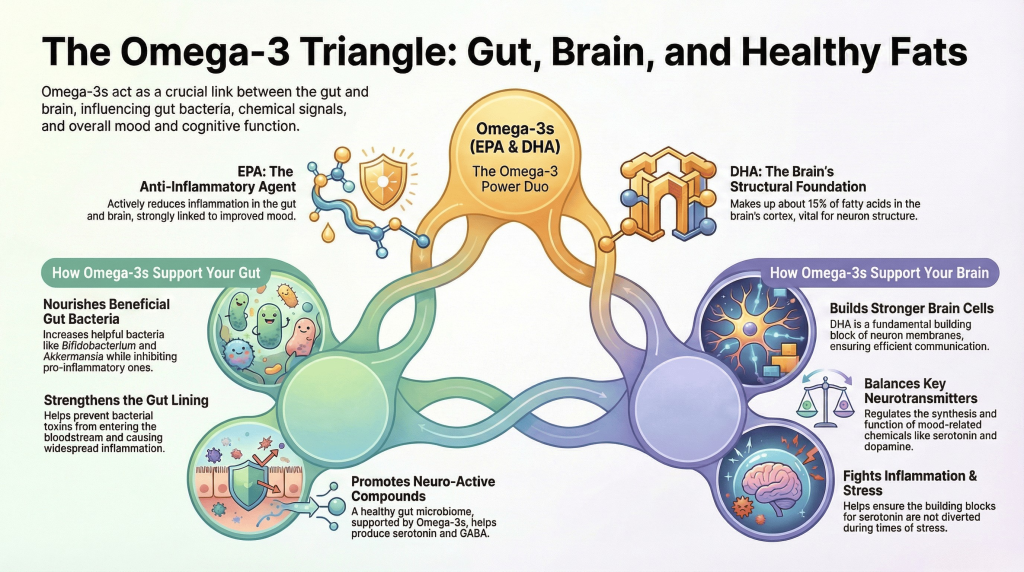
One of the most important mechanisms through which omega-3 fatty acids influence neurohealth is their ability to modulate the gut microbiota. Specifically, research shows that omega-3 intake increases the abundance of beneficial bacteria such as Bifidobacterium and Akkermansia, while simultaneously limiting the growth of pro-inflammatory microbes.
As a result, the gut microbiota produces higher levels of short-chain fatty acids (SCFAs), which nourish intestinal cells, strengthen the gut barrier and exert strong anti-inflammatory effects. At the same time, omega-3 fatty acids help maintain the integrity of the intestinal lining, preventing bacterial toxins like lipopolysaccharide (LPS) from entering the bloodstream and triggering systemic inflammation.
Importantly, chronic inflammation originating in the gut can negatively affect brain function. By reducing this inflammatory burden, omega-3 fatty acids indirectly protect neural health. Moreover, scientists have discovered that gut bacteria themselves produce neuroactive compounds. Serotonin, GABA and even small amounts of dopamine are synthesized in the gastrointestinal tract. Therefore, a healthy microbiome—supported by omega-3 intake—contributes to maintaining proper neurotransmitter balance and emotional stability.
Omega-3 and brain neurotransmitters
Beyond their effects on the gut, omega-3 fatty acids play a direct and essential role in brain physiology. DHA and EPA are not only structural components of neurons but also powerful modulators of signal transmission. In particular, DHA is a fundamental building block of neuronal cell membranes, ensuring their fluidity and flexibility. Thanks to this, neurotransmitter receptors and ion channels can function optimally at synapses.
Put simply, omega-3 fatty acids maintain the physical infrastructure required for efficient communication between neurons. Research shows that adequate omega-3 levels are essential for the synthesis, release and reuptake of key neurotransmitters, including serotonin, dopamine and GABA. Conversely, DHA deficiency disrupts membrane integrity and impairs neurotransmitter signaling.
Furthermore, omega-3 fatty acids influence tryptophan metabolism—the amino acid precursor of serotonin. Under conditions of chronic stress or inflammation, tryptophan is often diverted toward kynurenine pathways, reducing serotonin production. Notably, omega-3 fatty acids can inhibit this unfavorable shift, allowing more tryptophan to support serotonin synthesis. As a result, mood regulation, emotional balance and cognitive performance may improve.
Low omega-3 levels, on the other hand, are consistently associated with disturbances in dopaminergic and serotonergic transmission, which are commonly observed in mood disorders and certain psychiatric conditions.
The role of individual fatty acids: EPA and DHA
Although EPA (eicosapentaenoic acid) and DHA (docosahexaenoic acid) often occur together, they serve distinct yet complementary functions. To begin with, DHA forms the structural foundation of the brain—approximately 15% of all fatty acids in the cerebral cortex are DHA. It ensures membrane stability and supports efficient neural signaling.
EPA, by contrast, plays a dominant role in inflammation control. The body uses EPA to produce specialized pro-resolving mediators, such as resolvins and neuroprotectins, which actively resolve inflammation and promote tissue recovery. Within the gut–brain axis, EPA helps reduce inflammatory responses in both the digestive tract and the brain, while DHA ensures optimal neuronal communication.
Interestingly, recent studies suggest that EPA-dominant omega-3 formulations may provide slightly stronger antidepressant effects than DHA alone. This observation indicates that inflammation reduction may be particularly important for mood regulation. Nevertheless, without sufficient DHA, proper brain development and function cannot be maintained. Therefore, a balanced intake of both EPA and DHA is essential for full neuroprotective benefits.
Summary
In summary, a growing body of scientific evidence demonstrates that omega-3 fatty acids do not act in isolation. Instead, they are integral components of a complex interaction network linking the gut and the brain. By shaping the gut microbiota, strengthening the intestinal barrier, reducing inflammation and regulating neurotransmitter systems, EPA and DHA create conditions that support long-term neurobiological balance.
Ultimately, the gut–brain axis emerges not only as a communication pathway, but also as a key area where diet can exert lasting effects on mental health and cognitive function. Omega-3 fatty acids can therefore be regarded as one of the foundations of neurohealth. While they are not a universal remedy, adequate omega-3 intake represents an important preventive and supportive strategy for both gut and brain health—highlighting how deeply interconnected these systems truly are.
References
- Cattaneo A. i in. (2025). Restoring Balance: The Role of Omega-3 Polyunsaturated Fatty Acids on the Gut–Brain Axis and Other Interconnected Biological Pathways to Improve Depression. Nutrients 17(21):3426.
- Zou B. i in. (2025). Insight into the effects of Omega-3 fatty acids on gut microbiota: impact of a balanced tissue Omega-6/Omega-3 ratio. Front. Nutr. 2025.
- Serefko A. i in. (2024). Omega-3 Polyunsaturated Fatty Acids in Depression. Int. J. Mol. Sci. 25(16):8675.
- Zinkow A. i in. (2024). Molecular Mechanisms Linking Omega-3 Fatty Acids and the Gut–Brain Axis. Molecules 30(1):71.
- Frontiers in Nutrition. Omega-3 fatty acids: multi-target mechanisms and therapeutic perspectives in CNS disorders, 2025.
- Frontiers in Nutrition. Insight into the effects of omega-3 fatty acids on gut microbiota, 2025.
- Correlations between omega-3 fatty acids and inflammatory/glial markers in schizophrenia, 2023.
- PMC. Functional and structural benefits induced by omega-3 in the brain, 2016.
- Proceedings of the Nutrition Society. PUFA and their derivatives in neurotransmission and synapses, 2020.