
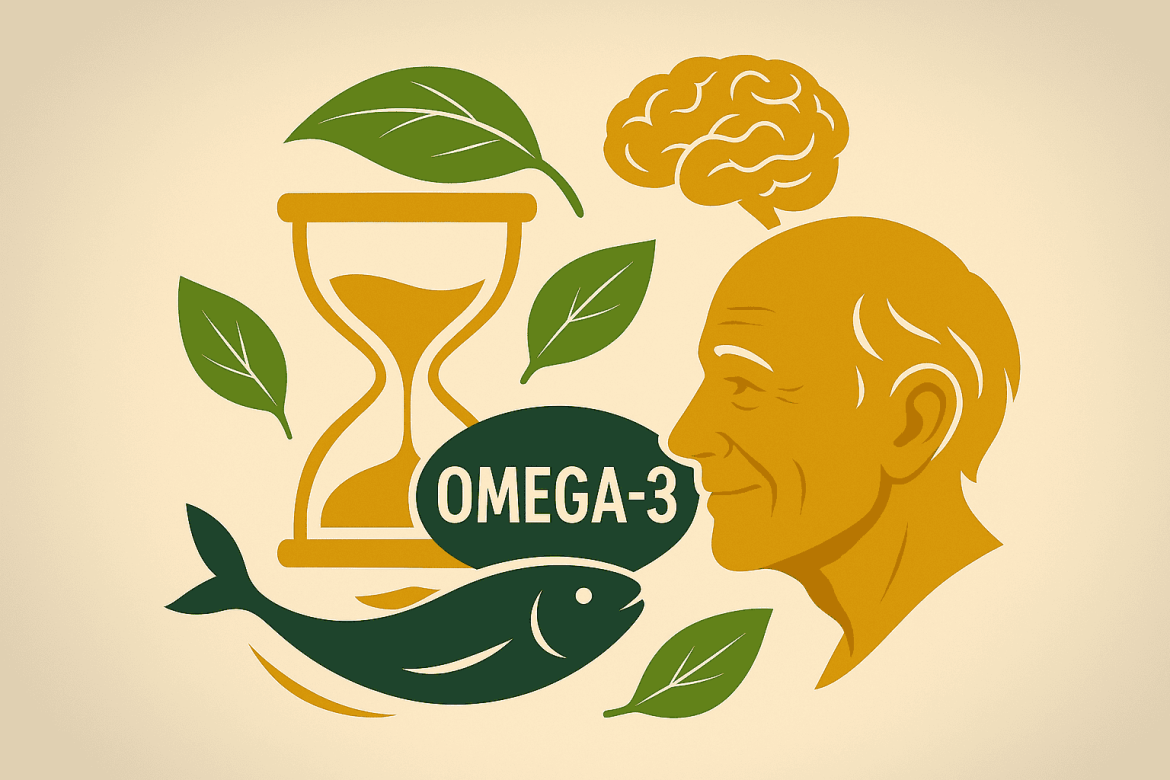
What if the key to a longer, healthier life was already on your plate? Omega-3 fatty acids, found in fatty fish and supplements, are gaining attention not just for heart health but also for their remarkable impact on the aging process. Groundbreaking research suggests that these essential fats can slow biological aging and even extend lifespan by several years. In this article, we explore the science behind omega-3s and their potential role in preserving vitality, cognitive function, and overall well-being as we age. Discover why omega-3 might just be one of the smartest health investments you can make.
Can omega-3 fatty acids slow down the aging process? In the search for ways to delay aging, scientists are increasingly pointing to the health potential of these fats. New research suggests that regular consumption of omega-3s may not only extend life but also slow down the biological clock of cells.
Omega-3 Fatty Acids and Lifespan: Breakthrough Discoveries
One of the most important sources of knowledge on health and longevity is the Framingham Study, which has been ongoing since 1948. An analysis of data from 2,240 individuals over the age of 65, observed for an average of 11 years, revealed an interesting relationship: a low level of omega-3s in red blood cells proved to be as strong a predictor of mortality as smoking.
People with the highest omega-3 blood levels lived almost five years longer on average than those with the lowest levels. Dr. Aleix Sala-Vila from the Hospital del Mar Medical Research Institute emphasizes:
“Regular cigarette smoking shortens life expectancy by 4.7 years – roughly the same as the gain from having high levels of omega-3 in the blood.”
The Omega-3 Index – A Biomarker of Longevity
Growing interest surrounds the Omega-3 Index, a marker indicating the percentage of EPA and DHA (the most important omega-3 fatty acids) in red blood cell membranes. Studies have shown that individuals with the highest index (>6.8%) were 33–34% less likely to die from any cause compared to those with the lowest index (<4.2%).
The optimal Omega-3 Index is 8% or higher, yet most Americans fall significantly below this threshold. Importantly, this marker appears to be a better predictor of longevity than traditional markers, such as total cholesterol levels.
Slowing Down Aging at the Cellular Level
A research team from the University of California, San Francisco, discovered that higher levels of omega-3s in the blood are correlated with slower shortening of telomeres – DNA structures that protect chromosomes and are considered the biological “clocks” of cells.
In a five-year study of patients with coronary heart disease, those with higher omega-3 levels experienced significantly slower telomere shortening, suggesting a deceleration of cellular aging.
Additional Benefits of Omega-3s in the Aging Process
Research indicates several mechanisms through which omega-3 fatty acids may support healthy aging:
- Slower biological aging: In the DO-HEALTH study, individuals over the age of 70 who took 1 gram of omega-3 daily for three years showed a biological aging delay of about 4 months, as measured by epigenetic DNA clocks.
- Anti-inflammatory effects: Omega-3s have strong anti-inflammatory properties, which help reduce the risk of age-related chronic diseases such as atherosclerosis, Alzheimer’s disease, and type 2 diabetes.
- Support for cognitive functions: DHA, one of the key components of omega-3, is crucial for brain cell membranes. Adequate DHA levels may help support memory, concentration, and delay cognitive decline associated with aging.
Are Omega-3s the Elixir of Youth?
While calling omega-3s an “elixir of youth” [LINK KOLAGEN] may be an exaggeration, the available scientific evidence clearly points to their significant role in slowing down the aging process and improving quality of life in older age. Notably, these effects relate not only to lifespan but also to healthspan – preserving mental function and reducing the burden of chronic disease.
Conclusion
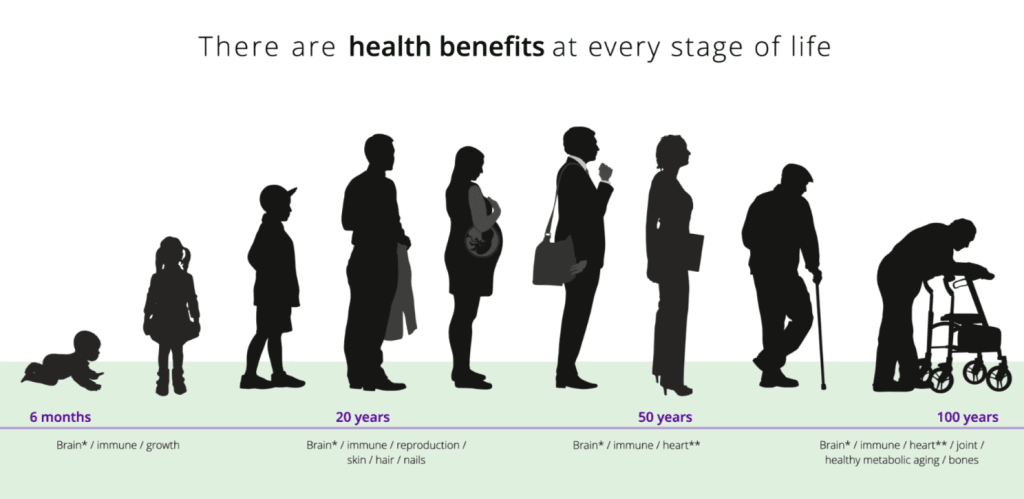
Omega-3 fatty acids are among the most well-studied dietary components with the potential to significantly affect the pace of aging. While not a miracle cure, their regular consumption – through fatty fish (like salmon, mackerel, sardines) or supplements – is a highly effective strategy for promoting health and longevity.
In an aging society, investing in an adequate omega-3 level may be one of the best preventive health decisions we can make – for ourselves, our brains, and our future.
Get acquainted with the products we recommend that support health and well-being
References
- Bischoff-Ferrari, H. A., et al. (2025). Individual and additive effects of vitamin D, omega-3 and exercise on epigenetic clocks: A randomized clinical trial. Nature Aging.
- Zhu, H., et al. (2025). Vitamin D3 and marine omega-3 fatty acids supplementation and leukocyte telomere length in the VITAL randomized clinical trial. The American Journal of Clinical Nutrition.
- Kuratko, C. N., et al. (2023). Omega-3 fatty acids and cognitive function.
- Cutuli, D., et al. (2016). Effects of omega-3 fatty acid supplementation on cognitive functions and brain structure in aging. Frontiers in Aging Neuroscience, 8, 38.
- Troesch, B., et al. (2020). Expert opinion on benefits of long-chain omega-3 fatty acids (DHA and EPA) in aging and clinical nutrition.
- McBurney, M. I., Tintle, N. L., Vasan, R. S., Sala-Vila, A., & Harris, W. S. (2021). Using an erythrocyte fatty acid fingerprint to predict risk of all-cause mortality: The Framingham Offspring Cohort. The American Journal of Clinical Nutrition, 114(5), 1447–1454.