

In today’s fast-paced world, maintaining good health has become more important than ever. Among the many nutrients essential for our well-being, omega-3 fatty acids stand out for their powerful and wide-ranging benefits. From supporting heart and brain function to enhancing mood and reducing inflammation, these healthy fats play a crucial role in keeping the body and mind in balance. In this article, we explore the remarkable effects of omega-3s on the human body—and why including them in your diet is one of the smartest choices you can make.
Scientific studies confirm that omega-3 fatty acids have a beneficial and multidirectional impact on human health. These are polyunsaturated fatty acids (PUFAs) that must be obtained from the diet, as the human body is unable to synthesize them on its own. The most important omega-3 fatty acids include alpha-linolenic acid (ALA), eicosapentaenoic acid (EPA), and docosahexaenoic acid (DHA). ALA can be partially converted into EPA and DHA.
1. Cardiovascular Health
EPA and DHA have a positive effect on the heart and blood vessels. They help reduce triglyceride levels, regulate heart rhythm, and decrease platelet aggregation, which lowers the risk of atherosclerosis and thrombosis. Regular intake reduces the risk of heart attack, stroke, and helps control high blood pressure.
2. Brain Health and Cognitive Function
DHA is a key component of the brain, making up about 25% of brain fats. It supports the formation of neural connections (synaptogenesis) and maintains the integrity of cell membranes. A deficiency in DHA may lead to cognitive impairment and increase the risk of neurodegenerative diseases such as Alzheimer’s disease. DHA supplementation may improve memory, concentration, and cognitive function, especially in older adults. Some studies also suggest that regular consumption of omega-3s may reduce the risk of Alzheimer’s and other forms of dementia.
3. Anti-inflammatory Action
EPA serves as a precursor for anti-inflammatory compounds such as resolvins and protectins. As a result, omega-3 fatty acids can alleviate chronic inflammation associated with heart disease, type 2 diabetes, rheumatoid arthritis, and some cancers. They may also help reduce symptoms of autoimmune diseases such as multiple sclerosis and lupus.
4. Mental Health Support
Research shows that omega-3s may positively affect mental health. They can act as natural antidepressants, particularly in cases of moderate depression, due to their ability to modulate levels of neurotransmitters like serotonin and dopamine. In addition, omega-3 supplementation may help alleviate symptoms of other mental disorders, including anxiety, mood disorders, and schizophrenia.
5. Eye Health
DHA is essential for the proper functioning of the retina. It supports the health of photoreceptor cells, which are crucial for visual acuity. Studies show that adequate DHA intake may reduce the risk of dry eye syndrome, protect against retinopathy, and help prevent age-related macular degeneration (AMD), especially in older adults.
6. Pregnancy and Child Development
During pregnancy, omega-3s—especially DHA—play a crucial role in the development of the fetal brain and eyes. Adequate intake can positively affect the child’s cognitive development. For this reason, omega-3 supplementation is recommended for pregnant women.
7. Skin Health
Omega-3s help moisturize the skin and regulate sebum production, which can reduce acne symptoms. Their anti-inflammatory properties also help alleviate skin conditions such as atopic dermatitis and psoriasis.
8. Bones and Joints
Omega-3s may support bone and joint health by reducing collagen degradation and relieving symptoms of joint inflammation, including rheumatoid arthritis. Evidence also suggests they may enhance bone mineral density, lowering the risk of osteoporosis.
9. Metabolism and Lipid Profile
Omega-3s have a beneficial effect on metabolism and lipid profile: they lower triglyceride levels, raise “good” HDL cholesterol, and reduce “bad” LDL cholesterol. They also improve insulin sensitivity, supporting the prevention of metabolic syndrome and type 2 diabetes.
Conclusion
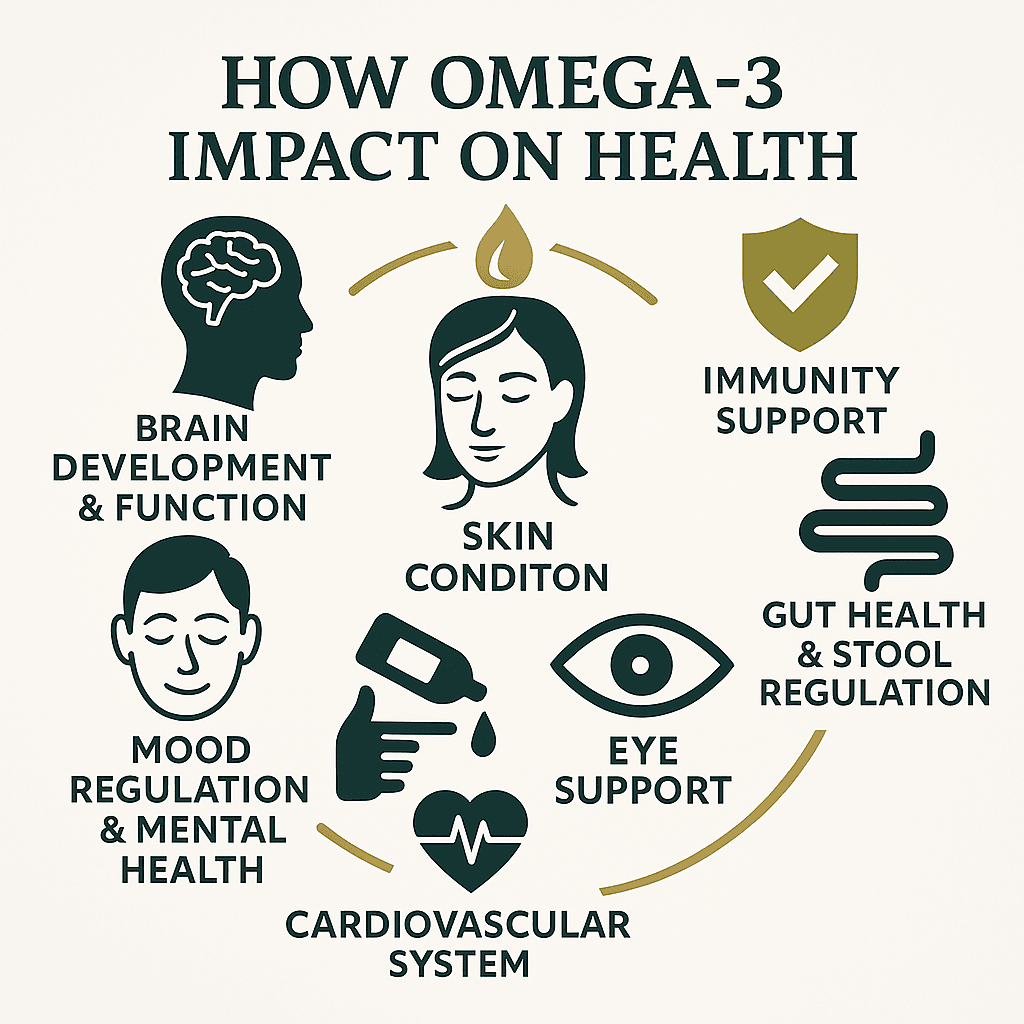
Omega-3 fatty acids are essential dietary components with a broad range of health benefits. They support heart and brain function, reduce inflammation, improve mood, protect eye and skin health, and enhance metabolism. Regular intake—especially from fatty fish or supplementation—can significantly improve overall health and reduce the risk of many chronic diseases.
Get acquainted with the products we recommend that support health and well-being
References
- Balk, E. M., & Lichtenstein, A. H. (2006). Effects of omega-3 fatty acids on serum markers of cardiovascular disease risk: A systematic review. The Journal of Nutrition, 136(4), 1126–1134.
- Calder, P. C., & Yaqoob, P. (2009). Omega-3 (n-3) fatty acids, cardiovascular disease and stability of atherosclerotic plaques. Proceedings of the Nutrition Society, 68(2), 258–266.
- Freeman, M. P., Hibbeln, J. R., Wisner, K. L., Davis, J. M., Mischoulon, D., Peet, M., Keck, P. E., Matheson, D., & Stoll, A. L. (2006). Omega-3 fatty acids: Evidence basis for treatment and future research in psychiatry. The Journal of Clinical Psychiatry, 67(12), 1954–1967.
- Hibbeln, J. R. (1998). Fish consumption and major depression: The role of omega-3 fatty acids in prevention and treatment. The American Journal of Psychiatry, 155(7), 976–978.
- Innis, S. M. (2008). Dietary omega-3 fatty acids and the developing brain. Brain Research, 1237, 35–43.
- Mozaffarian, D., & Wu, J. H. Y. (2011). Omega-3 fatty acids and cardiovascular disease: Effects on risk factors, molecular pathways, and clinical events. Journal of the American College of Cardiology, 58(20), 2047–2067.
- SanGiovanni, J. P., & Chew, E. Y. (2005). The role of omega-3 long-chain polyunsaturated fatty acids in health and disease of the retina. Progress in Retinal and Eye Research, 24(1), 87–138.
- Simopoulos, A. P. (2002). Omega-3 fatty acids in inflammation and autoimmune diseases. Journal of the American College of Nutrition, 21(6), 495–505.