

Did you know that what you eat could shape how well your lungs function and even how they age? Omega-3 fatty acids, found abundantly in fatty fish and marine oils, are not just good for your heart and brain—they also play a remarkable role in keeping your respiratory system healthy. New research highlights how these powerful nutrients can protect your lungs from inflammation, slow down natural decline, and lower the risk of chronic diseases like asthma or COPD. Discover how adding more omega-3s to your diet might be one of the simplest ways to breathe easier and support your lung health for years to come.
Omega-3 fatty acids, particularly eicosapentaenoic acid (EPA) and docosahexaenoic acid (DHA), play a key role in maintaining the health of the respiratory system and proper lung function. Recent American scientific studies highlight the significant benefits of these essential nutrients for lung health, while their deficiency may lead to serious respiratory problems.
Why the lungs?
The respiratory system, much like the cardiovascular system, is prone to chronic inflammation—seen in asthma, COPD (chronic obstructive pulmonary disease), or pulmonary fibrosis. Omega-3s, thanks to their anti-inflammatory properties, can potentially protect the lungs from damage and support their proper functioning. American research funded by institutions such as the National Institutes of Health (NIH) confirms that omega-3s may be an important factor influencing the condition of our lungs.
Mechanisms of omega-3 action in the respiratory system
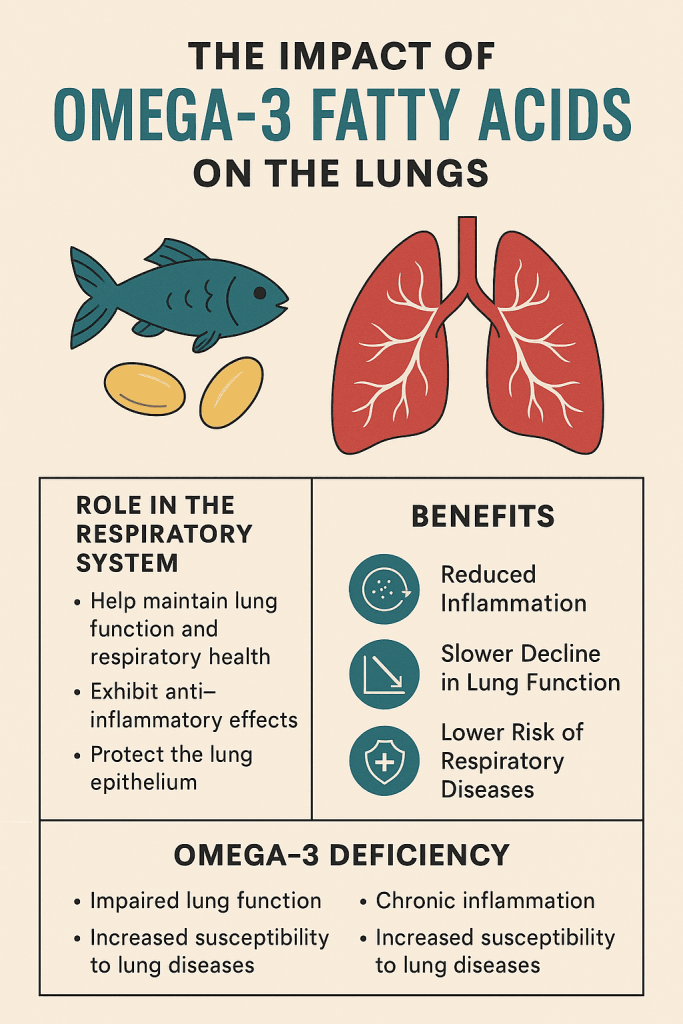
Omega-3s exhibit strong anti-inflammatory effects in the body. In the lungs, this translates into suppressing excessive inflammatory responses: they reduce levels of pro-inflammatory cytokines (like IL-6, IL-8, TNF-α) and C-reactive protein (CRP) in the blood. Moreover, omega-3s give rise to special molecules called resolvins, which help resolve inflammation in lung tissue and promote regeneration of the airway epithelium. This means omega-3s can limit the recruitment of inflammatory cells to the airways and restore immune balance. In practice, this means that an adequate level of omega-3s can “calm down” the respiratory system—reducing bronchial hyperresponsiveness (important in asthma) and preventing chronic lung tissue damage due to inflammation. Omega-3s protect the integrity of the respiratory epithelium, strengthening the lungs’ natural barrier against pathogens and harmful substances. They also help maintain the fluidity of cell membranes, which is crucial for the proper function of airway epithelial cells. It has been observed that people with a healthy omega-6 to omega-3 fatty acid ratio are less likely to develop inflammation-related diseases, including lung diseases. Omega-3s also impact immune cell membranes (such as T lymphocytes), altering their composition and activity—another way they modulate inflammatory responses in the respiratory system.
Omega-3s and lung function—benefits
Can eating fish translate into better lung capacity? This question was tackled by American scientists in a large population study. In 2023, they published results from a cohort of 15,000 American adults (average age ~56 years) who were free of lung diseases at the start and were followed for an average of 7 years. Researchers regularly measured key respiratory indicators in participants: FEV₁ (forced expiratory volume in one second, a measure of airway patency) and FVC (forced vital capacity). It turned out that individuals with higher blood levels of omega-3s experienced a slower decline in lung function with age. Particularly beneficial was a high DHA level—each 1% increase in DHA (as a percent of total blood fatty acids) was associated with a slowing of FEV₁ loss by ~1.4 ml/year and FVC by ~2.0 ml/year. As a result, the lungs of these individuals aged more slowly than those with low omega-3 levels. Furthermore, the risk of developing airway obstruction (typical of COPD) was about 7% lower for each 1% increase in DHA. These positive associations were observed regardless of sex, race, or even smoking history—though the greatest benefits of high omega-3 levels were seen in former smokers (suggesting omega-3s may help repair smoking-related damage). Genetic analysis (using Mendelian randomization) also confirmed that people genetically predisposed to higher omega-3 levels had better respiratory parameters. Additionally, individuals with high omega-3 levels showed greater resistance to the negative effects of air pollution. Studies revealed that high omega-3 intake was linked to improved lung function after exposure to nitrogen dioxide, whereas such benefits were not seen in the low intake group.
There is strong evidence that high omega-3 levels (especially DHA) help preserve good lung function. In other words, a diet rich in omega-3s may slow the natural decline in lung capacity in adults and reduce the risk of developing chronic respiratory diseases.
Consequences of omega-3 deficiency
A deficiency in omega-3 fatty acids can lead to a range of respiratory health problems. Insufficient levels of these key nutrients weaken the integrity of the lung epithelium, compromising the lungs’ defense mechanisms and increasing susceptibility to injury and disease. With omega-3 deficiency, there is an imbalance between pro-inflammatory and inflammation-resolving mediators. This leads to chronic, unresolved inflammation, characteristic of many lung diseases, including asthma, COPD, and acute respiratory distress syndrome (ARDS).
Omega-3 deficiency can also result in a weakened immune response—impaired polarization of helper T cells, disrupting the balance between Th1 and Th2 responses. This immune imbalance may increase the risk of allergies and autoimmune diseases of the respiratory system. People with low omega-3 levels are more sensitive to the harmful effects of air pollution. Mouse studies have shown that omega-3 supplementation reduces lung damage caused by PM2.5 through modulation of gut microbiota and lung metabolism.
Omega-3s in respiratory diseases
- Asthma and allergies: Thanks to their anti-inflammatory properties, omega-3s may alleviate symptoms of allergic asthma. Studies indicate that a diet rich in omega-3s (while limiting excess omega-6) is associated with better asthma control—less airway inflammation (e.g., lower exhaled nitric oxide levels, a marker of inflammation) and improved respiratory parameters in asthma patients. Omega-3s may reduce airway reactivity to allergens, partly by limiting the production of inflammatory mediators. Interestingly, there are reports that providing omega-3s already during fetal life may protect children from developing asthma. Mothers who consumed adequate amounts of long-chain omega-3s during pregnancy had children less likely to develop early childhood asthma, probably due to favorable programming of the immune system (balancing Th1/Th2 responses).
- Chronic obstructive pulmonary disease (COPD): This disease, usually linked to long-term smoking, involves irreversible airway narrowing and chronic lung inflammation. In the context of COPD, omega-3s also show promise. Low omega-3 intake may contribute to the development and severity of COPD—in other words, omega-3 deficiency is a risk factor for more intense inflammation and worsened lung function. Epidemiological studies in the U.S. have shown that people who eat a lot of fish (a source of omega-3s) have a lower risk of developing COPD. Among patients already diagnosed with COPD, very low omega-3 intake is common—on average only ~0.1 grams of EPA+DHA per day, several times less than recommended. In one study, only 4.75% of patients with severe COPD regularly took omega-3 supplements. Interestingly, this small supplementing group had better health outcomes: lower CRP levels (a marker of inflammation) in the blood, better lipid profiles, fewer disease exacerbations (0 vs 1 on average in six months), and could walk longer distances in the 6-minute walk test. Although this was a cross-sectional observation, these findings align with other studies. For example, researchers at Johns Hopkins University measured omega-3 blood levels in COPD patients and found that higher EPA+DHA levels were associated with better respiratory quality of life and fewer moderate disease exacerbations. These findings suggest that enriching the diet of COPD patients with omega-3s (e.g., through fish oil) may bring clinical benefits—though more clinical trials are needed to make definitive recommendations.
- Pulmonary fibrosis (interstitial lung diseases): Pulmonary fibrosis, such as idiopathic pulmonary fibrosis (IPF), is a severe disease involving progressive scarring (fibrosis) of lung tissue, impairing gas exchange. Standard treatments are limited, so researchers are exploring factors that might slow these diseases. U.S. studies suggest an interesting role for omega-3s here. Scientists from the University of Virginia analyzed data from over 300 patients with pulmonary fibrosis and found that those with higher omega-3 blood levels had better respiratory performance and longer transplant-free survival compared to patients with low omega-3s. In other words, their disease progressed more slowly. This effect was evident regardless of other factors (such as smoking or coexisting heart disease), indicating a specific link to the fibrosis process. The authors emphasize that omega-3s may be a “modifiable factor” affecting prognosis—something we can influence through diet or supplementation to potentially improve patients’ condition. Thus, it is already clear that patients with interstitial lung diseases should not avoid omega-3-rich foods and may actually benefit from them.
Supplementation recommendations
To achieve optimal lung health benefits, it is recommended that adults consume 250-375 mg of EPA+DHA daily, according to U.S. guidelines. In cases of particular exposure to pollutants or existing lung diseases, increasing the dose may be justified.
Conclusions
Omega-3 fatty acids play a fundamental role in maintaining lung health through their anti-inflammatory properties, protection of the respiratory epithelium integrity, and support of inflammation resolution. Adequate omega-3 levels ensure better lung function, greater resilience to air pollution, and a reduced risk of respiratory diseases. On the other hand, deficiency of these key nutrients can lead to chronic inflammation, weakened immune responses, and increased susceptibility to lung diseases. Regular omega-3 supplementation, especially for people exposed to air pollution or suffering from respiratory diseases, may be an important preventive and therapeutic strategy.
It is worth emphasizing that while omega-3s do not replace traditional treatments for respiratory diseases, they can be a significant component of prevention and supportive therapy. A diet rich in omega-3s is safe and beneficial for overall health, so its positive impact on the lungs is yet another reason to ensure regular intake of these fatty acids.
Thus, the expert consensus is that maintaining proper omega-3 levels in the body is an important factor supporting healthy breathing throughout life.
Get acquainted with the products we recommend that support health and well-being
References
- Patchen, B. K., et al. (2023). Investigating associations of omega-3 fatty acids, lung function decline, and airway obstruction. American Journal of Respiratory and Critical Care Medicine, 208(8), 846–857.
- Fekete, M., et al. (2022). Effects of omega-3 supplementation on quality of life, nutritional status, inflammatory parameters, and other outcomes in COPD. Annals of Palliative Medicine, 11(9), 2794–2805.
- Kemper, T. A., et al. (2024). Higher plasma omega-3 levels are associated with improved exacerbation risk and respiratory-specific quality of life in COPD. Chronic Obstructive Pulmonary Diseases: Journal of the COPD Foundation, 11(3), 202–213.
- Kim, J., et al. (2024). Associations of omega-3 fatty acids with pulmonary fibrosis outcomes. Chest. Advance online publication.
- Xu, P., et al. (2021). Progress on the protective effects of maternal fatty acid supplementation on infant asthma risk: A narrative review. Annals of Palliative Medicine, 10(2), 215–227.
- National Institutes of Health, National Heart, Lung, and Blood Institute. (2023, July 20). Omega-3 fatty acids appear promising for maintaining lung health.
- American Journal of Respiratory and Critical Care Medicine. (2023). Investigating associations of omega-3 fatty acids, lung function decline, and airway obstruction. American Journal of Respiratory and Critical Care Medicine, 208(8), 846–857.
- Annals of the American Thoracic Society. (2021). Lung function and short-term ambient air pollution exposure: Differential impacts of omega-3 and omega-6 fatty acids. Annals of the American Thoracic Society, 18(4), 695–703.
- Environmental Health. (2021). The influence of dietary intake of omega-3 polyunsaturated fatty acids on the association between short-term exposure to ambient nitrogen dioxide and respiratory and cardiovascular outcomes among healthy adults. Environmental Health, 20, Article 1.
- American Heart Association. (2021). Where NO2 meets omega-3 polyunsaturated fatty acids: Health impact of short-term ambient air pollution exposure in healthy adults. Circulation, 143(16), 1582–1585.
- Environmental Science and Pollution Research. (2023). Omega-3 polyunsaturated fatty acids ameliorate PM2.5 exposure-induced lung injury in mice through remodeling the gut microbiota and modulating the lung metabolism. Environmental Science and Pollution Research, 30(10), 27459–27470.
- Journal of Clinical Medicine. (2023). Alteration of the respiratory microbiome in hospitalized patients with asthma–COPD overlap during and after an exacerbation. Journal of Clinical Medicine, 12(5), 1962.