

In today’s world of ever-changing dietary trends, fats are often misunderstood and unfairly labeled as unhealthy. However, not all fats are created equal—and many play vital roles in keeping our bodies and minds functioning at their best. From supporting brain health to regulating metabolism and building cellular structures, fats are far more than just a source of calories. This article explores the essential functions of fats in the human body and highlights why choosing the right types of fats is crucial for long-term health and well-being.
Why We Actually Need Fat in Our Diet
Fats are an essential component of the human diet, performing numerous biological functions in the body. They are not only one of the main sources of energy but also a key structural element of cells and a regulator of many metabolic processes. The appropriate quantity and quality of fats consumed are fundamentally important for maintaining health and preventing lifestyle-related diseases.
How Fats Keep Your Body Running Smoothly
Alongside proteins and carbohydrates, fats are a basic macronutrient necessary for the proper functioning of the human body. Although often associated with unhealthy diets and overweight, their role in the body is crucial. Fats not only provide energy—delivering 9 kcal per gram—but also serve as essential building blocks for cells and tissues. Their adequate amount and quality in the diet are vital for good health.
How Fats Protect and Build Your Cells
Every human cell is surrounded by a cell membrane, whose main components are phospholipids—a type of fat. This membrane not only protects the cell from the external environment but also enables substance exchange, intercellular communication, and proper receptor function. The structure ensures the cell’s flexibility, integrity, and permeability. The integrity and fluidity of the cell membrane directly depend on the types of fatty acids it contains. Fats, as components of biological membranes, allow cells to respond to stimuli and maintain homeostasis.
The Surprising Connection Between Fat and Your Brain
The human brain consists of approximately 60% fat (dry weight), making fats an essential component for its proper function. This high lipid content is due to the vast number of nerve cells (neurons), which have extensive projections (dendrites and axons) covered by lipid-rich cell membranes. The brain’s lipid composition is highly diverse and includes phospholipids, glycolipids, cholesterol, and various classes of fatty acids.
Of particular importance are long-chain polyunsaturated fatty acids, which are significant components of neuronal and glial cell membranes. Fatty acids such as DHA (docosahexaenoic acid) are crucial for proper neuronal function, synaptogenesis, and brain plasticity. A deficiency in healthy fats, especially polyunsaturated fatty acids, can lead to cognitive impairments, depression, and an increased risk of neurodegenerative diseases such as Alzheimer’s disease.
How Much Fat Should You Really Eat?
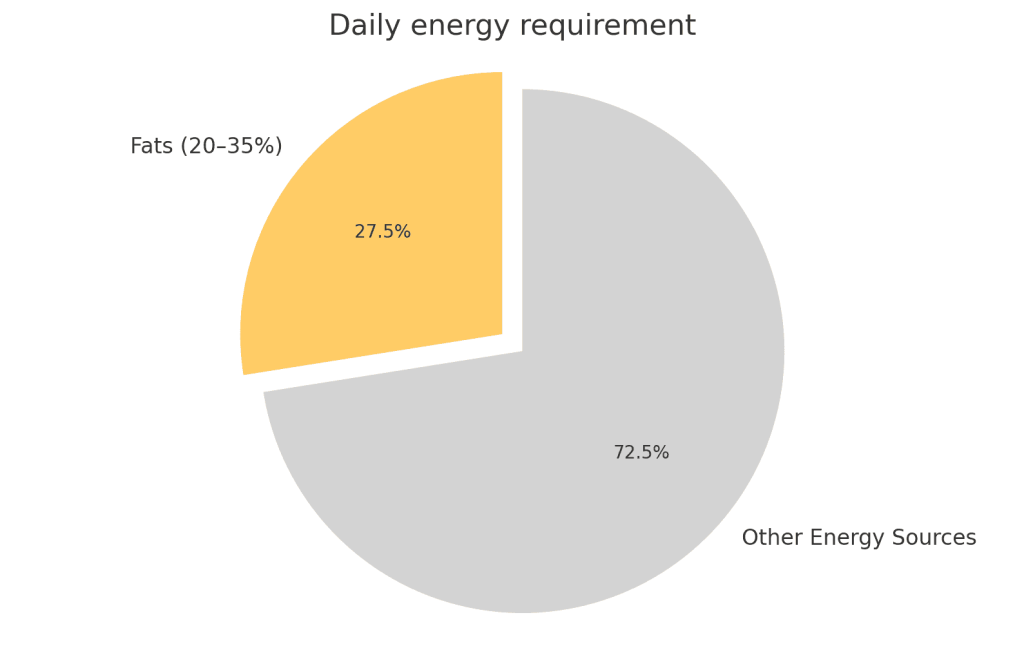
According to the Dietary Guidelines for Americans 2020–2025, fats should provide 20–35% of daily energy intake. Insufficient fat intake may lead to deficiencies in fat-soluble vitamins (A, D, E, K), hormonal imbalances, and impaired cognitive functions. However, it is essential to prioritize unsaturated fats (from sources such as olive oil, avocados, and fish) and limit saturated fats to less than 10% of daily energy intake, as excessive saturated fat consumption increases the risk of cardiovascular diseases.
The Power of Healthy Fats Like Omega-3
Special attention should be given to unsaturated fatty acids, particularly omega-3 fatty acids, which offer numerous health benefits. Omega-3s, such as the aforementioned DHA and EPA (eicosapentaenoic acid), play a fundamental role in maintaining the health of the brain, heart, and immune system. Research shows that regular intake of omega-3s can reduce inflammation, improve cognitive functions, and lower the risk of cardiovascular diseases. Major sources of omega-3s include fatty fish (e.g., salmon, mackerel, sardines), chia seeds, flaxseed, and fish oil.
Incorporating adequate amounts of unsaturated fats into the daily diet is key to a healthy lifestyle and long-term maintenance of the body’s functionality.
The Bottom Line: Fats Are Essential for Health
Fats are an essential component of the human diet, performing numerous biological functions in the body. They are a key structural element of cells, a source of energy, and precursors of many biologically active compounds. They are especially important for the proper functioning of the brain, which consists of about 60% lipids (dry weight).
The appropriate quantity and quality of dietary fats are crucial for maintaining health and preventing lifestyle diseases. Particular attention should be paid to the intake of unsaturated fatty acids, including omega-3s, which play a vital role in the functioning of the nervous and cardiovascular systems, as well as in anti-inflammatory processes.
Get acquainted with the products we recommend that support health and well-being
References
- Calder, P. C. (2010). Omega‑3 fatty acids and inflammatory processes. Nutrients, 2(3), 355–374.
- U.S. Department of Health and Human Services, & U.S. Department of Agriculture. (2020). Dietary Guidelines for Americans, 2020–2025.
- Stanley, J. C., Elsom, R. L., Calder, P. C., Griffin, B. A., Harris, W. S., Jebb, S. A., Lovegrove, J. A., & Sanders, T. A. B. (2012). Lipid nutrition and the brain. Annual Review of Nutrition, 32, 707–739.
- Mozaffarian, D., & Wu, J. H. Y. (2011). Omega‑3 fatty acids and cardiovascular disease: Effects on risk factors, molecular pathways, and clinical events. Journal of the American College of Cardiology, 58(20), 2047–2067.
- Harvard T. H. Chan School of Public Health. (n.d.). Fats and cholesterol. The Nutrition Source.
- Gómez‑Pinilla, F. (2008). Brain foods: The effects of nutrients on brain function. Nature Reviews Neuroscience, 9(7), 568–578.
- Dyall, S. C. (2015). Long‑chain omega‑3 fatty acids and the brain: A review of the independent and shared effects of EPA, DPA and DHA. Frontiers in Aging Neuroscience, 7, Article 52.
- Bourre, J. M. (2004). Roles of unsaturated fatty acids (especially omega-3 fatty acids) in the brain at various ages and during aging. The Journal of Nutrition, Health & Aging, 8(3), 163–174.