
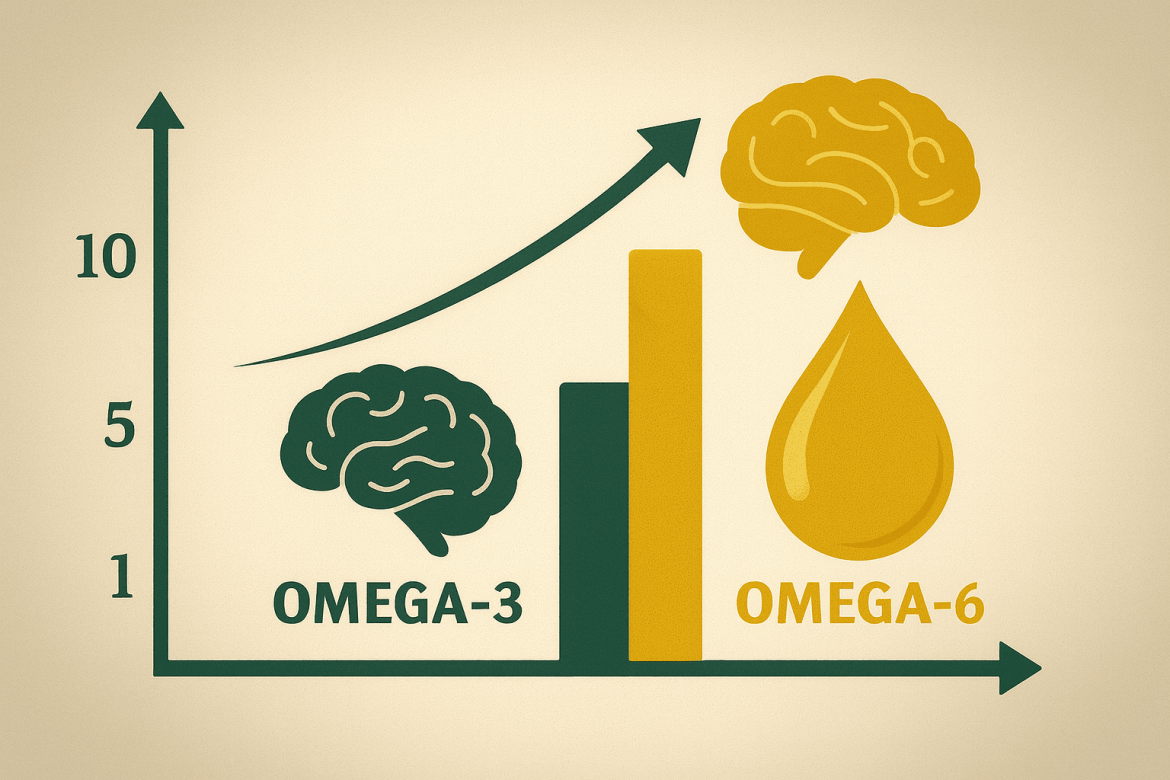
Have you ever wondered how the fats in your diet affect your health on a deeper level? Over the past century, a quiet but dramatic shift has taken place in the way we eat—especially when it comes to essential fatty acids like omega-3 and omega-6. This change has had a profound impact on inflammation, chronic disease, and overall wellness. In this article, we’ll explore how the balance between these two types of fats has evolved, why it matters, and what you can do to bring it back into harmony. Get ready to discover a key piece of the nutritional puzzle that could transform your health.
Over the past 100 years, our diet has undergone significant changes—especially regarding the intake of two key types of fats: omega-3 and omega-6 fatty acids. While both are essential for health, their proportion in the diet plays a crucial role. The modern Western diet is characterized by a dramatic increase in omega-6 intake and a simultaneous decrease in omega-3 consumption, which may lead to various health problems.
A Quick Refresher: What Are Omega-3 and Omega-6 Fats?
Omega-3 fatty acids (e.g., EPA and DHA) are known for their anti-inflammatory properties and their beneficial effects on the heart, brain, and nervous system. They are found in fatty fish (such as salmon, mackerel, and sardines), chia seeds, flaxseeds, and walnuts.
Omega-6 fatty acids (e.g., linoleic acid) also play an important role—they support cell growth and immune system function. However, excessive intake can promote inflammation. Omega-6 is mainly found in vegetable oils (soybean, corn, sunflower) and processed foods.
What the Omega Balance Looked Like in the Past
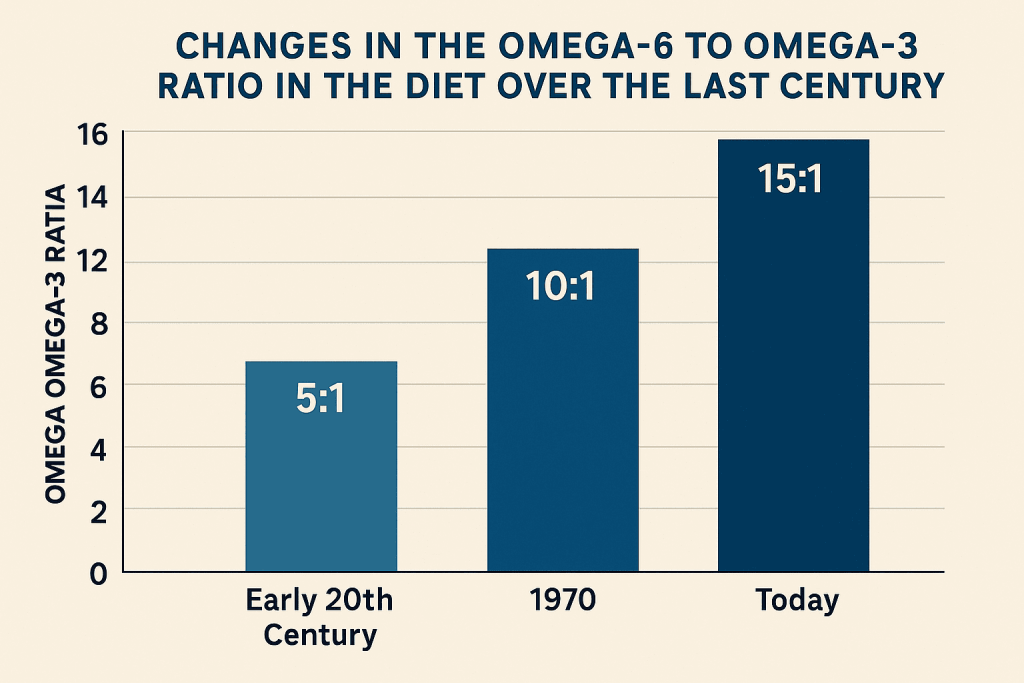
Research suggests that for most of human evolution, the dietary omega-6 to omega-3 ratio was around 1:1. Our bodies evolved with this balance in mind. Even at the beginning of the 20th century, the ratio in the American diet was about 5:1. Over the following decades, it rose to 10:1, and today it may even exceed 15:1!
What Caused the Shift in Fat Consumption?
The 20th century brought a nutritional revolution. Consider these data points:
- Soybean oil consumption in the U.S. increased more than 1,000-fold between 1909 and 1999.
- Linoleic acid (omega-6) availability increased from 2.79% to 7.21% of total energy intake.
- ALA (omega-3) intake increased only slightly—from 0.39% to 0.72%.
- The omega-6 to omega-3 ratio shifted from 6.4:1 in 1909 to 10:1 in 1999, and now often exceeds 15:1.
The main causes include: the growth of the oilseed industry, changes in livestock feed, the rise of processed food consumption, and the promotion of low-fat diets in the 1970s and 1980s.
Why an Imbalanced Ratio Hurts Your Health
An imbalanced omega-6 to omega-3 ratio can trigger inflammation and is associated with heart disease, type 2 diabetes, depression, obesity, and even cancer.
Clinical studies have shown that improving this ratio brings tangible benefits:
- 4:1 – associated with a 70% reduction in mortality from heart disease.
- 2.5:1 – inhibited cancer cell growth in colorectal cancer.
- 2–3:1 – reduced inflammation in rheumatoid arthritis.
- Dietary changes also significantly helped patients with chronic migraines.
Simple Ways to Restore a Healthy Fat Balance
- Increase omega-3 intake: Eat fatty fish at least twice a week, or consider supplements (fish oil or algae oil).
- Limit omega-6 intake: Reduce consumption of vegetable oils rich in omega-6 (soybean, corn, sunflower) and processed foods.
- Choose healthy fats: Replace omega-6-rich oils with those that have a more favorable fatty acid profile, such as olive oil, canola oil, or avocado oil.
The Bottom Line: Balance Matters More Than You Think
Maintaining the right balance between omega-3 and omega-6 fatty acids is vital for health. The modern Western diet is marked by excessive omega-6 and deficient omega-3 intake, which can lead to various health issues. Making conscious dietary choices—such as increasing omega-3 and limiting omega-6—can help restore this balance and support overall well-being.

Get acquainted with the products we recommend that support health and well-being
References
- American Heart Association. (2023). Are you getting enough omega-3 fatty acids?
- Biehl, E., Klemm, R. D., Manohar, S., Webb, P., Glatzer, D., & Byrd, K. A. (2022). United States dietary trends since 1800: Lack of association between saturated fatty acid consumption and non-communicable diseases. Journal of the American College of Nutrition, 41(8), 905–917.
- Blasbalg, T. L., Hibbeln, J. R., Ramsden, C. E., Majchrzak, S. F., & Rawlings, R. R. (2011). Changes in consumption of omega-3 and omega-6 fatty acids in the United States during the 20th century. The American Journal of Clinical Nutrition, 93(5), 950–962.
- Harris, W. S., Mozaffarian, D., Rimm, E., Kris-Etherton, P., Rudel, L. L., Appel, L. J., Engler, M. M., Engler, M. B., & Sacks, F. (2009). Omega-6 fatty acids and risk for cardiovascular disease. Circulation, 119(6), 902–907.
- Ramsden, C. E., Faurot, K. R., Zamora, D., Palsson, O. S., MacIntosh, B. A., Gaylord, S., Taha, A. Y., Rapoport, S. I., & Hibbeln, J. R. (2013). Targeted alteration of dietary n-3 and n-6 fatty acids for the treatment of chronic headaches: A randomized trial. Pain, 154(11), 2441–2451.
- Simopoulos, A. P. (2002). The importance of the ratio of omega-6/omega-3 essential fatty acids. Biomedicine & Pharmacotherapy, 56(8), 365–379.
- Simopoulos, A. P. (2006). Evolutionary aspects of diet, the omega-6/omega-3 ratio and genetic variation: Nutritional implications for chronic diseases. Biomedicine & Pharmacotherapy, 60(9), 502–507.
- Simopoulos, A. P. (2008). The importance of the omega-6/omega-3 fatty acid ratio in cardiovascular disease and other chronic diseases. Experimental Biology and Medicine, 233(6), 674–688.
- Simopoulos, A. P. (2010). The omega-6/omega-3 fatty acid ratio: Health implications. OCL – Oilseeds and Fats, Crops and Lipids, 17(5), 267–275.
- Zheng, S., Huang, T., Chen, Y., et al. (2024). The relationship between dietary intake of ω-3 and ω-6 fatty acids and frailty among U.S. middle-aged and older adults. Aging, 16(12), 9034–9048.