
Omega-3 fatty acids have a well-documented, beneficial impact on heart and cardiovascular health — they lower the risk of heart attacks, strokes, and sudden cardiac death, improve lipid profiles and help regulate blood pressure. A deficiency is associated with a higher risk of serious cardiovascular diseases. The best results come from regularly eating fatty fish or taking appropriate supplements, especially for people in high-risk groups.
Why are omega-3s so important for your heart?
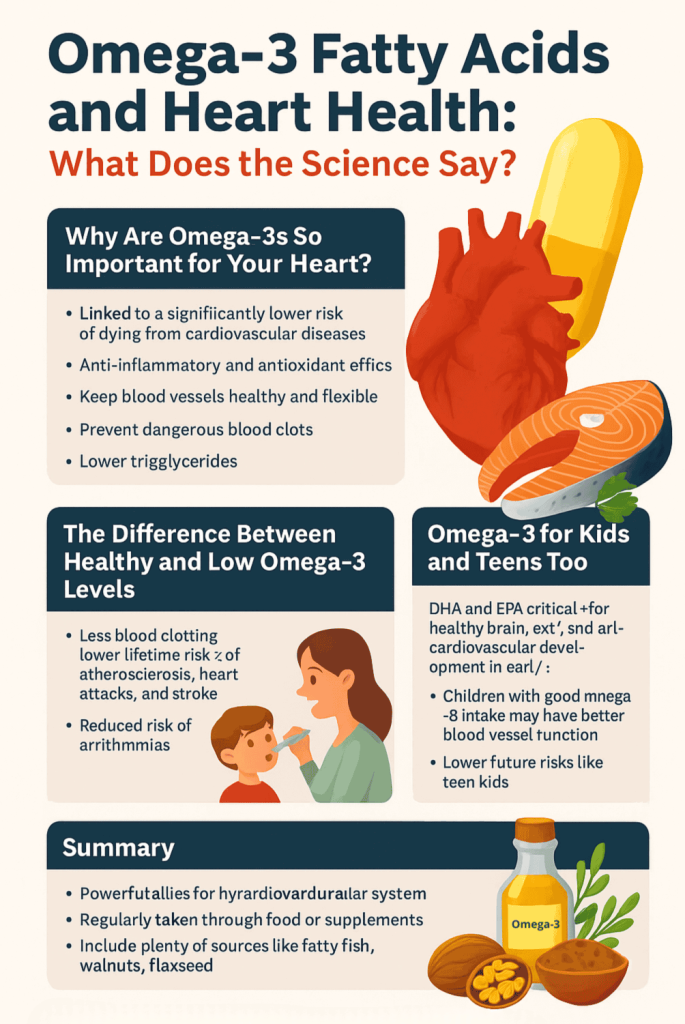
Decades of clinical research and large-scale studies in the U.S. have shown that getting enough omega-3 fatty acids is linked to a significantly lower risk of dying from cardiovascular diseases, including heart attacks, strokes, coronary artery disease, arrhythmias, high blood pressure, and heart failure. One huge meta-analysis involving over 149,000 people found that omega-3 supplements reduced cardiovascular death, heart attacks, coronary events, and the need for interventions like stents or bypass surgery.
So what makes omega-3s so protective?
They work through multiple pathways. Omega-3s are powerful anti-inflammatory and antioxidant agents. That means they calm down chronic inflammation and lower oxidative stress, which otherwise damage your arteries over time. Omega-3s also help keep your blood vessels flexible and your endothelial lining healthy, making it easier for blood to flow. They even have an anti-clotting effect, reducing the tendency of platelets to clump together and form dangerous blood clots.
When it comes to your cholesterol and fats, omega-3s shine by lowering triglycerides — high doses of fish oil (around 4 grams daily) are especially effective and used in treating people with very high triglycerides. While omega-3s don’t lower LDL (“bad”) cholesterol, they may slightly reduce non-HDL cholesterol (a broader measure of harmful fats), and slightly raise HDL (“good”) cholesterol. By cutting triglycerides, they take pressure off your circulatory system.
Because of these benefits, people with high omega-3 blood levels (often measured as the “omega-3 index”) tend to have healthier hearts and longer lifespans. On the flip side, if you’re not getting enough omega-3s — for example, if your diet is low in fish — your body misses out on this protection. That can mean more inflammation, stiffer arteries, and a higher long-term risk of atherosclerosis and heart disease. Simply put: a good omega-3 level acts like a protective shield for your heart, while a deficiency (especially paired with lots of saturated fats and omega-6 oils) can open the door to cardiovascular problems.
Prevention and support for existing heart disease
The American Heart Association has long recommended eating fish — especially fatty fish like salmon, mackerel, or sardines — at least twice a week. This gives you roughly 0.25–0.5 grams of EPA and DHA per day, a level linked with lower heart disease rates in population studies. Omega-3s play a role not just in prevention, but also in supporting treatment of existing heart conditions. They’re not a substitute for your heart meds or a healthy lifestyle, but they’re a valuable ally.
Omega-3 and Blood Pressure
A lesser-known benefit of omega-3s is their modest ability to lower blood pressure. This is important at the population level — even a small drop in average blood pressure can translate into fewer heart attacks and strokes across millions of people. A major 2022 meta-analysis found that taking about 2–3 grams of EPA+DHA daily led to an average drop of around 2–3 mmHg in systolic pressure (the top number) and 1–2 mmHg in diastolic pressure (the bottom number). That’s roughly the amount of omega-3 you’d get from a generous serving of fatty fish.
What’s more, people with high blood pressure seem to benefit the most — their numbers tend to drop more noticeably, while people with already normal blood pressure see smaller changes. Omega-3s might also help prevent hypertension from developing in the first place, by keeping blood vessels more elastic and reducing inflammation in artery walls. They even influence hormones that control how tightly your arteries constrict.
Still, it’s important to be realistic: omega-3s aren’t a replacement for blood pressure medications. Think of them as a supportive piece of the puzzle alongside diet, exercise, and any necessary prescriptions. The AHA considers up to 3 grams per day of omega-3s safe and possibly helpful for people wanting extra support for their blood pressure. Higher doses may offer a slightly stronger effect, especially for those at high risk, but should be used under medical guidance.
The difference between healthy and low omega-3 levels
When you have plenty of omega-3s on board, your blood vessels stay supple, your blood is less prone to clotting, triglycerides are kept in check, and blood pressure is more stable. That adds up to a lower lifetime risk of atherosclerosis, coronary artery disease, heart attacks, and strokes. Omega-3s even help stabilize the electrical activity in heart cells, reducing the risk of dangerous arrhythmias. Some studies suggest they also help the heart muscle heal better after a heart attack (by limiting so-called “left ventricular remodeling”), helping it keep its pumping power.
In contrast, when omega-3s are lacking — often due to a Western diet low in fish but high in saturated fats and omega-6 oils — many of these protective effects vanish. Chronic inflammation ramps up, arteries become stiffer, triglycerides rise, and overall cardiovascular risk grows. In fact, surveys show that the average American adult consumes only about 0.1 grams of EPA+DHA per day, an amount experts consider “extremely low.”
The result? A missed opportunity for extra heart and vessel protection. Over time, people with omega-3 deficiencies may see slightly higher blood pressure, elevated triglycerides, and a greater chance of heart events down the road. The biggest benefits come from long-term, consistent omega-3 intake paired with a healthy lifestyle, physical activity, and managing other risk factors like LDL cholesterol, blood sugar, and blood pressure.
Omega-3 for kids and teens too
Heart disease might sound like an adult problem, but omega-3s matter from early life onward. In kids, DHA and EPA are critical for healthy brain and eye development, but they also play a role in the cardiovascular system. Research suggests that getting enough omega-3 during childhood may support healthy blood vessel growth and help regulate blood pressure later on.
For example, a study in Denmark gave infants aged 9 to 12 months a fish oil supplement. After three months, the babies who got omega-3 had slightly lower systolic blood pressure compared to those who didn’t — not because babies have hypertension, but because omega-3s may shape the body’s long-term blood pressure regulation. In older kids and teens, omega-3s help keep triglycerides in check and combat inflammation. Essentially, a good supply of omega-3 in youth builds a foundation for a healthy heart in adulthood, lowering future risks like teen hypertension or elevated blood fats.
That’s why many health organizations encourage introducing fatty fish into kids’ diets early (as age-appropriate), and ensuring quality DHA and EPA through trusted supplements if needed.
Conclusion
Omega-3 fatty acids are powerful allies for your cardiovascular system. Taken regularly through food or supplements, they help lower blood pressure, reduce inflammation, improve cholesterol balance by cutting triglycerides, and protect your heart from arrhythmias and heart attacks. The difference between having a robust omega-3 level versus being deficient is a bit like the difference between a well-oiled machine and one that’s dry and squeaky — in the first case, your heart and vessels run smoothly and stay resilient.
So make sure your diet includes plenty of sources like fatty marine fish, walnuts, and flaxseed. The latest American research confirms that omega-3s — especially from fish oil — are a key part of cardiovascular prevention not only for adults, but for kids too. Of course, they work best as part of an overall healthy lifestyle. As cardiologists like to say: “Eat fish for a healthy heart” — and now we know it’s largely thanks to these irreplaceable omega-3 fats.
Get acquainted with the products we recommend that support health and well-being
References
- Khan, S. U., et al. (2019). Effect of omega-3 fatty acids on cardiovascular outcomes. Mayo Clinic Proceedings, 94(9), 1620–1630.
- Jain, A. P., et al. (2015). Omega-3 fatty acids and cardiovascular disease. European Heart Journal Supplements, 17(Suppl A), A1–A3. https://doi.org/10.1093/eurheartj/suv018
- Harvard Health Publishing. (2021, March 17). Omega-3 fatty acids and the heart: New evidence, more questions. Harvard Medical School.
- Chaddha, A., Eagle, K. A., & Hayek, S. S. (2015). Omega-3 fatty acids and heart health. Circulation, 132(23), e396–e398.
- Liao, J., et al. (2022). The effects of fish oil on cardiovascular diseases: Systematic evaluation and recent advance. Frontiers in Cardiovascular Medicine, 8, 802306.
- Williamson, L. (2023, February 27). Are you getting enough omega-3 fatty acids? American Heart Association News. https://www.heart.org/en/news/2023/02/27/are-you-getting-enough-omega-3-fatty-acids
- Kelley-Hedgepeth, A. (2021, March 17). Omega-3 fatty acids and the heart: New evidence, more questions. Harvard Health Publishing.
- Skulas-Ray, A. C., et al. (2017). Omega-3 fatty acids and cardiovascular disease: New recommendations from the American Heart Association. Circulation, 135(15), e867–e884.
- Harbild, H. L., et al. (2013). Fish oil supplementation from 9 to 12 months of age affects infant attention in a free-play test and is related to change in blood pressure. Prostaglandins, Leukotrienes and Essential Fatty Acids, 89(5), 327–333.