
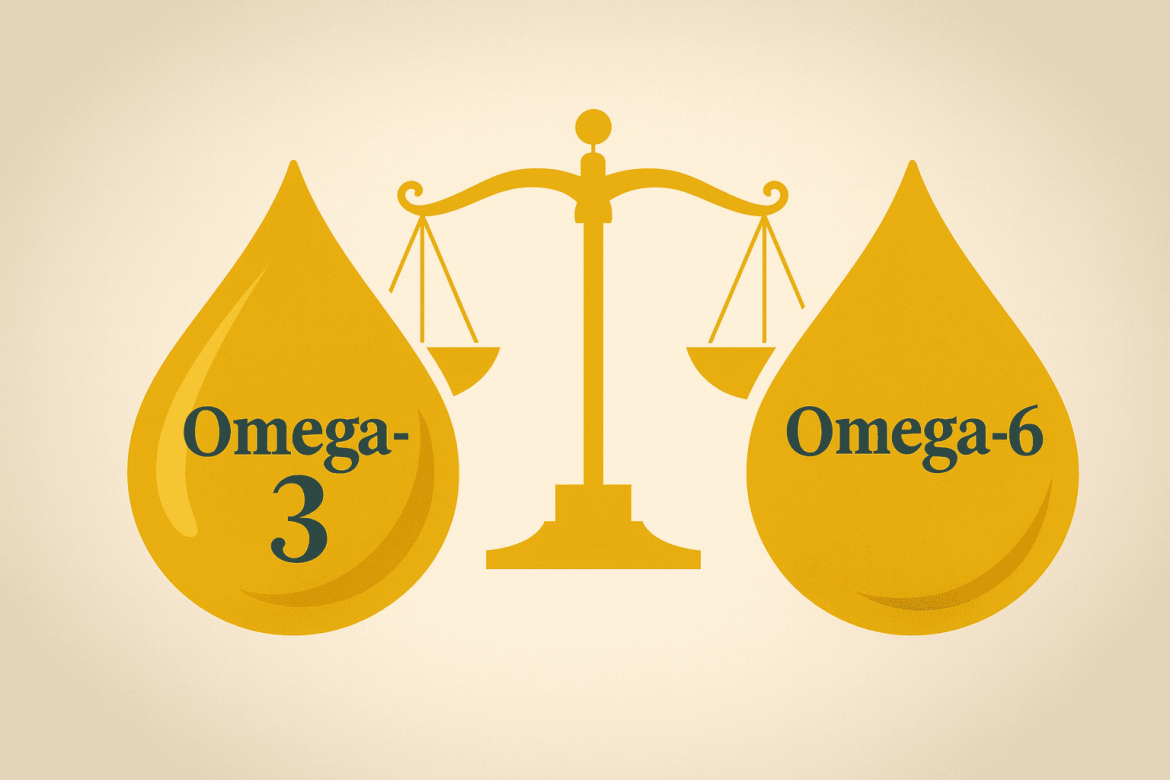
In today’s world of fast-paced lifestyles and processed foods, we often overlook the impact of essential nutrients on our long-term health. Among the most powerful—but often misunderstood—are omega-3 and omega-6 fatty acids. These tiny molecules play a massive role in everything from brain function to heart health and inflammation control. But are you getting the right balance? Discover why these fats matter, how they work in your body, and what you can do to optimize your health through smarter nutrition choices.
What Makes Omega-3s So Special?
Omega-3 and omega-6 fatty acids are two groups of polyunsaturated fatty acids that play a key role in many biological processes. While they share some characteristics, they differ in their chemical structure and dietary sources.
Types of Omega-3 and Where to Find Them
Omega-3s are fatty acids where the first double bond is located at the third carbon atom from the end of the carbon chain. The main types include:
- ALA (alpha-linolenic acid) – the shortest, with 18 carbon atoms and 3 double bonds.
Sources: primarily plant-based – flaxseeds, chia seeds, walnuts, canola oil, leafy green vegetables, almonds, hemp seeds. - EPA (eicosapentaenoic acid) – 20 carbon atoms, 5 double bonds.
Sources: fatty fish (salmon, mackerel, tuna, sardines, herring), fish oils, seafood, algae. - DHA (docosahexaenoic acid) – 22 carbon atoms, 6 double bonds.
Sources: the same as EPA – fatty fish, fish oils, seafood, algae.
Why Your Body Needs Omega-3s?
- Cardiovascular system: EPA and DHA lower triglyceride levels, improve vascular elasticity, and reduce blood pressure, thus decreasing the risk of atherosclerosis and heart disease.
- Brain function: DHA is essential for the development and proper functioning of the brain – it supports memory, concentration, and cognitive functions. DHA deficiency is linked to depression and Alzheimer’s disease.
- Anti-inflammatory effects: Especially EPA, helps reduce inflammation, which is important in the treatment and prevention of chronic diseases such as rheumatoid arthritis and autoimmune conditions.
- Eye health: DHA supports the function of the retina and helps protect against age-related macular degeneration.
What You Should Know About Omega-6s
Like omega-3s, omega-6s are essential polyunsaturated fatty acids, but their first double bond is located at the sixth carbon atom.
The main omega-6 fatty acids include:
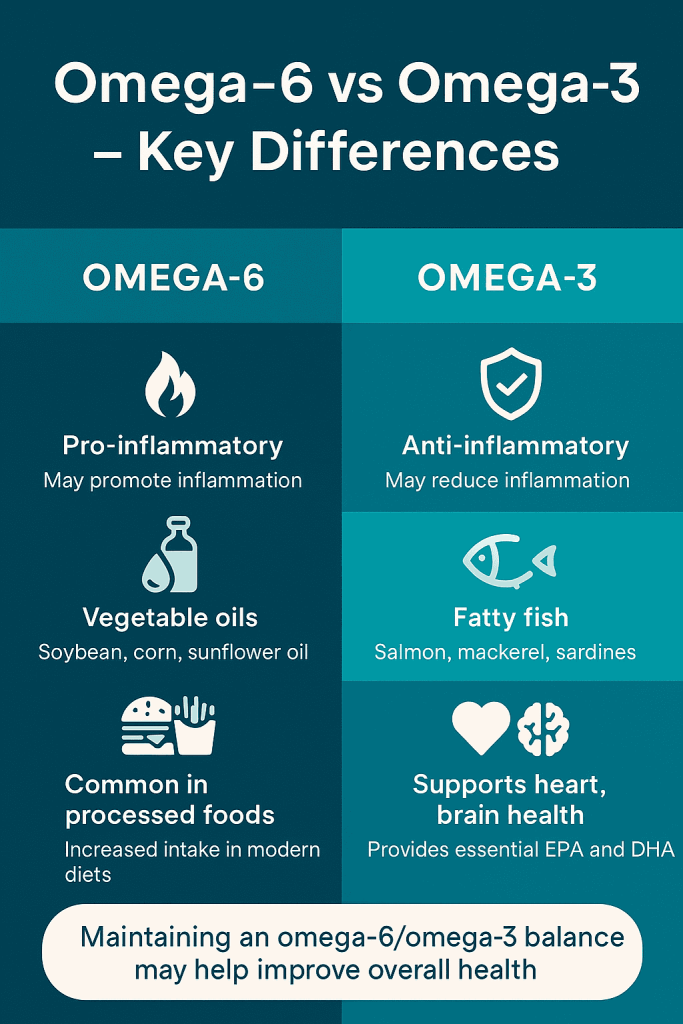
- LA (linoleic acid): found in vegetable oils (soybean, sunflower, corn, safflower), walnuts, sunflower seeds, and pumpkin seeds.
- AA (arachidonic acid): derived from LA and found mainly in meat, poultry, eggs, and dairy products.
Why Too Much Omega-6 Can Be a Problem?
- Inflammatory processes: AA is a precursor to pro-inflammatory compounds (prostaglandins and leukotrienes). While inflammation is a natural immune response, excess omega-6 can lead to chronic inflammation, contributing to many chronic diseases.
- Cell growth and development: Omega-6s support the growth and development of the body, particularly in children and adolescents.
- Brain and nervous system function: They also play a role in brain development and nervous system activity.
Omega-3 and omega-6 fatty acids are essential nutrients, meaning the body cannot synthesize them on its own and must obtain them from food.
Finding the Right Balance Between Omega-3 and Omega-6
Modern diets typically contain too much omega-6 and too little omega-3, leading to an unhealthy ratio — often 10:1 to 20:1, whereas the optimal ratio should be around 1:1 to 4:1.
Consequences of Imbalance:
- Increased inflammation: promoting the development of chronic diseases (e.g., cardiovascular disease, diabetes, autoimmune disorders).
- Reduced effectiveness of omega-3s: excess omega-6 competes for the same enzymes needed to convert omega-3s into their active forms, reducing EPA and DHA efficacy.
- Mood and cognitive issues: imbalance is associated with a higher risk of depression, aggression, and cognitive decline.
Simple Ways to Improve Your Omega-3 to Omega-6 Ratio
- Limit intake of omega-6-rich oils: avoid corn oil, soybean oil, sunflower oil.
- Increase omega-3 intake: consume more fatty fish, chia seeds, walnuts, flaxseeds, and flaxseed oil.
- Follow a balanced diet: based on fresh vegetables, fruits, whole grains, fish, and healthy fats.
- Consider omega-3 supplementation: even the best-composed diet today may not be enough. It is important to choose high-quality supplements.
Today’s food, even in a balanced diet, often lacks sufficient nutrients due to its low quality and processing, which removes vitamins and minerals essential for human health. That’s why high-quality supplementation is recommended.
The Bottom Line: Balance Your Fats for Better Health
Omega-3 fatty acids play a crucial role in supporting the heart, brain, eyes, and reducing inflammation. Their impact stems from their unique chemical structure and ability to regulate biological processes.
Maintaining a proper balance between omega-3 and omega-6 is key to overall health. Conscious nutrition, lifestyle changes, and quality supplementation can significantly help prevent chronic diseases and improve overall well-being.
Get acquainted with the products we recommend that support health and well-being
References
- Bazinet, R. P., & Layé, S. (2014). Polyunsaturated fatty acids and their metabolites in brain function and disease. Nature Reviews Neuroscience, 15(12), 771–785.
- Calder, P. C. (2015). Marine omega-3 fatty acids and inflammatory processes: Effects, mechanisms and clinical relevance. Biochimica et Biophysica Acta (BBA) – Molecular and Cell Biology of Lipids, 1851(4), 469–484.
- Givens, D. I., & Gibbs, R. A. (2008). Current intakes of EPA and DHA in European populations and the potential of animal-derived foods to increase them. Proceedings of the Nutrition Society, 67(3), 273–280.
- Gunstone, F. D. (2001). Lipids in foods: Chemistry, biochemistry and technology. CRC Press.
- Innis, S. M. (2007). Dietary (n-3) fatty acids and brain development. The Journal of Nutrition, 137(4), 855–859.
- Mozaffarian, D., & Wu, J. H. Y. (2011). Omega-3 fatty acids and cardiovascular disease: Effects on risk factors, molecular pathways, and clinical events. Journal of the American College of Cardiology, 58(20), 2047–2067.
- Ruxton, C. H. S., Calder, P. C., Reed, S. C., & Simpson, M. J. A. (2005). The impact of long-chain n-3 polyunsaturated fatty acids on human health. Nutrition Research Reviews, 18(1), 113–129.
- Simopoulos, A. P. (2002). The importance of the ratio of omega-6/omega-3 essential fatty acids. Biomedicine & Pharmacotherapy, 56(8), 365–379.
- Spector, A. A., & Kim, H. Y. (2015). Discovery of essential fatty acids. Journal of Lipid Research, 56(1), 11–21.
- Swanson, D., Block, R., & Mousa, S. A. (2012). Omega-3 fatty acids EPA and DHA: Health benefits throughout life. Advances in Nutrition, 3(1), 1–7.